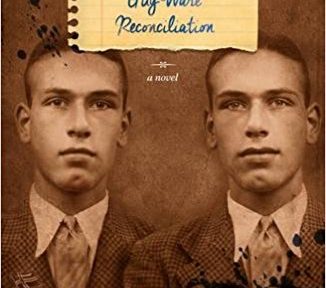
Robert Exley works at the Faculty, a counter-terrorism branch of government in which his father also served. His wife, once a member of the Faculty herself and a supposedly more promising one, is dead. She was hit by a bus years ago and Robert lives with their son, Stephen, who asks him every night how his day was – ‘If I told you I’d have to kill you’ being the standard response – and who writes a diary in code on his mother’s old typewriter, leaving the pages temptingly on display for Robert to decode. This diary is the only way in which Stephen ever fully communicates with his father – assuming he wanted his father to read it all along, for the novel makes it clear, nothing should be assumed.
Divided into two halves, the four or five years before he meets a prisoner in the basement, and four or five years later when he does, the novel is also divided into before Stephen goes to university and when he returns. In the first section we hear Stephen’s imagined telling of his grandfather’s life as a beacon keeper. For his diary morphs into a fictionalised biography rather than a daily account of his life. This telling is somehow implicated in a particular case Robert is handed by a colleague that leads to the incarceration of that prisoner in the basement. Continue reading The Faculty of Indifference by Guy Ware